Page 3 of 3

9.25 Friday Faves – The Fitnessista

Hiiii! Happy weekend! Hello from the other side of the plague. We had the domino effect of sickness in our house. P got sick, then the Pilot, then Liv, and I thought I had fought it… and it got me. I was pretty sick all week last week and just now on the ups. It felt good to take a barre class yesterday – my first workout in over a week!!

The rest of the weekend should be pretty fun. The Pilot is in town, I’m hoping we can go line dancing at Maverick, high school football game (so fun), P has a soccer game and a bday party. The weather has been the tiniest bit crispy and I love that it feels a little bit like fall. I hope you have a fun and relaxing weekend ahead!

For now, i’s time for the weekly Friday Faves roundup! This is where I share some of my favorite finds from the week and around the web. I always love hearing about your faves, too, so please shout out something you’re loving in the comments section below.

(Friendly reminder that affiliate links are included in Friday Faves! Thank you so much for supporting the blog)

9.25 Friday Faves

Fashion, beauty, random:

These beauty gummies from Organifi! It’s still a little too early to see if they’re doing anything, but they taste absolutely amazing. This link should auto-apply my code FITNESSISTA for your discount.

Madewell is having a huge sale right now! I love these jeans, these flats, this midi dress, and this cardigan.

Tuckernuck is also having an amazing sale.

Read, watch, listen:

Reading this right now and it was blowing my mind. If you’re someone who loves the woo side of things, I highly recommend it.

Return to the podcast! I finally recorded a long episode about the great identity crisis and what I’ve been working on behind the scenes. It should be live next Thursday 🙂

New Substack with the great Christmas plan! I’m getting things together as early as possible this year and am sharing my plan if you’d like to join!

Totally trying this tip.

Loved this podcast episode.

Fitness, health, and good eats:

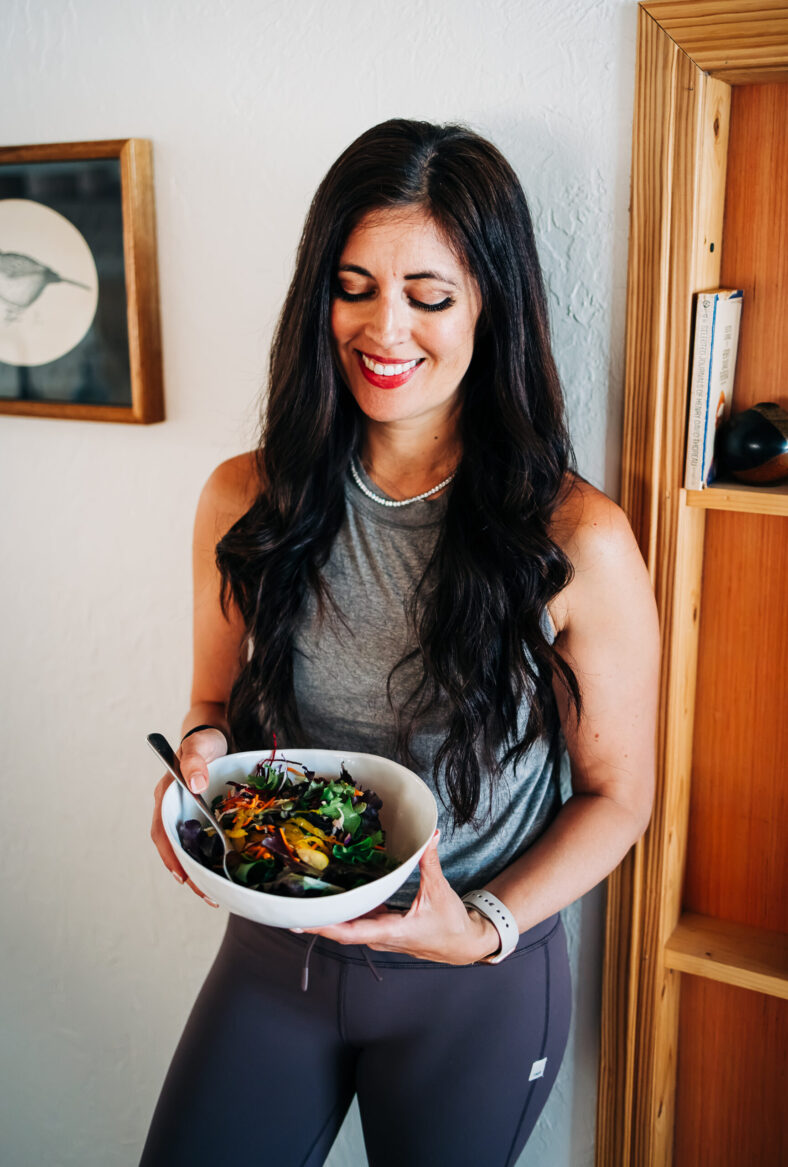
New workout clothes from Vuori. I hadn’t bought workout clothes in quite a while and did a lil refresh. I got these leggings and this top, another color of the same style of leggings with this sports bra, a new pair of black leggings, and two of these shirts. I have it in white and wear it all the time. I love that their clothes are such incredible quality and they always have new colors to choose from.

Footage of the Pilot getting his Minerals and Metals test:

I’m excited to go through these with him.

Sunday dinner plans.

Have an amazing weekend and I’ll see ya soon!

xoxo

Gina

Success! Check your email for a free 30-day meal and fitness cheat sheet

High Volume Low Calorie Recipes (15 Filling Meals I Actually Make)

These 15 high volume low calorie recipes are big, filling meals built on protein, fiber and veggies, so you can eat a real plate of food and stay full for hours without blowing past your calorie goals.

Hi friends! If you’ve ever finished a “light” meal and felt hungry 30 minutes later, this post is for youuuuuu. High volume low calorie recipes let you eat generous portions that actually fill you up, because they lean on foods with lots of water, fiber and protein (think leafy greens, non-starchy veggies, berries, lean protein and broth-based soups). Below you’ll find my favorite breakfasts, lunches, dinners, soups and even a dessert, plus my easy swaps for making any meal higher volume.

What is volume eating?

Volume eating means choosing foods that take up a lot of space on your plate (and in your stomach) for relatively few calories. Your stomach has stretch receptors that help signal fullness, so a big bowl of veggie-loaded stir fry can feel more satisfying than a small, calorie-dense snack, even if the calories are similar.

The foods that make this work are usually high in water or fiber and low in added fats and sugars. Pair them with protein and you’ve got a meal that keeps you full and helps keep blood sugar steady, which is a big deal for my clients in their 30s and 40s who are dealing with afternoon crashes and cravings.

High volume low calorie foods to keep on hand

These are the staples I lean on to bulk up meals:

  • Leafy greens: spinach, romaine, arugula, kale, cabbage
  • Non-starchy veggies: zucchini, cauliflower, broccoli, bell peppers, cucumbers, mushrooms, green beans, tomatoes
  • Fruit: berries, watermelon, apples, citrus
  • Lean protein: chicken breast, ground turkey, shrimp, white fish, eggs and egg whites, Greek yogurt, cottage cheese
  • Fiber-rich carbs: lentils, black beans, oats, potatoes and sweet potatoes (more filling than you’d expect!)
  • Volume “swaps”: cauliflower rice, zucchini noodles, spaghetti squash, shirataki noodles, broth-based soups

High volume low calorie recipes

Calorie counts are estimates per serving and will change depending on your portions and toppings. I grouped these by meal so you can build a full day.

Breakfast

1. Mediterranean Egg Bites

My make-ahead breakfast for busy mornings. Eggs plus a pile of veggies means you can eat several bites for a filling, protein-packed start to the day. They’re gluten-free and dairy-free, too.

Main ingredients: eggs, spinach, tomatoes, olives, red onion, herbs

Get my Mediterranean egg bites recipe

2. Veggie Scramble with Berries

Scramble 2 eggs plus egg whites with a big handful of spinach, mushrooms and peppers, then serve with a cup of berries. The veggies nearly double the size of the plate for very few extra calories.

Calories per serving: ~250–300

Volume boost: add salsa and a side of sautéed zucchini

Lunch and dinner

3. Egg Roll in a Bowl

This one-pan favorite is a lighter twist on a takeout classic. It’s packed with ground turkey or pork, cabbage, carrots and a dash of garlic and ginger.

Calories per serving: ~250–300

Main ingredients: ground turkey, cabbage, carrots, garlic, coconut aminos

Gluten-free and great for meal prep! Try this version from Skinnytaste

4. Sushi Roll in a Bowl

A deconstructed sushi roll that’s quick, fresh and totally customizable. Use cauliflower rice (or half rice, half cauliflower rice) for a lighter option. It’s also packed with omega-3s if you use salmon. I’ve made it with chicken breast when I’m out of salmon, and it’s still so good.

Calories per serving: ~350

Main ingredients: rice or cauliflower rice, cucumber, avocado, nori, salmon, shrimp or crab, coconut aminos

Check out my version here

5. High Protein Chipotle Bowl

My homemade take on a Chipotle bowl. Load it with lettuce, fajita veggies and salsa for volume, and keep the protein front and center.

Main ingredients: chicken, romaine, fajita peppers and onions, pico de gallo, a little guac

Get my high protein Chipotle bowl recipe

6. Chicken Crust Pizza

Pizza night meets protein power. A high-protein crust made from chicken and egg is topped with marinara, veggies and cheese for a comforting low-carb meal.

Calories per serving: ~300–350

Main ingredients: ground chicken, egg, mozzarella, marinara, bell peppers, mushrooms

Try this recipe from The Big Man’s World

7. Burger in a Bowl

All the burger flavors, none of the bun. Loaded with seasoned beef or turkey, pickles, tomatoes and a tangy sauce.

Calories per serving: ~400

Main ingredients: ground beef or turkey, romaine, pickles, tomatoes, mustard, Greek yogurt sauce. I also like to add roasted sweet potatoes.

This version from Eating Bird Food is great

8. Mediterranean Bowl

Fresh, bright and full of flavor. This bowl combines lean protein with lots of veggies, olives, hummus and a creamy dressing. My Buddha bowl dressing is delicious on it, too.

Calories per serving: ~400

Main ingredients: chicken, spinach or romaine, tomatoes, cucumbers, tzatziki, hummus, olives

Try this version from The Big Man’s World

9. High Volume Veggie Stir Fry

A rainbow of veggies stir-fried in a garlicky coconut aminos sauce. Add tofu or shrimp and serve over cauliflower rice or shirataki noodles.

Calories per serving: ~300

Main ingredients: bell peppers, broccoli, snap peas, tofu or shrimp, garlic, ginger, coconut aminos

This stir fry from Cookie and Kate is great inspo

10. Zoodle Pasta with Turkey Meatballs

Classic comfort food with a lighter twist. Zucchini noodles stand in for pasta (or go half zoodles, half pasta) and get topped with juicy turkey meatballs and marinara.

Calories per serving: ~280

Main ingredients: zucchini noodles, ground turkey, egg, marinara, herbs, garlic

Try a version like this from Healthy Fitness Meals

11. Turkey Barbacoa Lettuce Wraps

Make a big batch of slow cooker turkey barbacoa, then pile it into crunchy butter lettuce cups with pickled onions and salsa. You get a huge plate of food, and leftovers are perfect for bowls all week.

Main ingredients: turkey, lime, garlic, spices, plus butter lettuce for wrapping

Get my slow cooker turkey barbacoa recipe

12. Shrimp Ceviche

Bright, zesty and so refreshing. Cooked shrimp tossed with tomatoes, cucumber, onion, cilantro and lime makes a big, satisfying bowl that’s naturally low in calories and high in protein. Serve it with cucumber slices or a few tortilla chips.

Main ingredients: cooked shrimp, tomato, cucumber, red onion, cilantro, lime, avocado

Get my shrimp ceviche recipe

13. Mason Jar Salad

The easiest way to make sure a big salad actually happens on busy days. Layer dressing on the bottom, sturdy veggies and protein in the middle and greens on top.

Main ingredients: greens, cucumbers, peppers, chickpeas, chicken or eggs, your favorite dressing

Here’s how I make a mason jar salad

Soups

Broth-based soups are one of the best volume eating tricks out there. They’re warm, filling and full of veggies, and they’re perfect for meal prep.

14. Red Lentil Dal Soup

My copycat of the Whole Foods red lentil dal soup. Lentils give you plant protein and lots of fiber, which keeps you full for hours.

Main ingredients: red lentils, onion, garlic, ginger, turmeric, cumin, tomatoes, broth

Get my red lentil dal soup recipe. If you want a fall favorite, my Panera copycat autumn soup is another cozy option.

Dessert

15. Homemade Protein Ice Cream

Yes, dessert can be high volume! Blending frozen fruit with protein powder and milk makes a big, fluffy bowl of “ice cream” that satisfies a sweet tooth and adds protein to your day.

Main ingredients: frozen banana or berries, protein powder, milk of choice

Get my homemade protein ice cream recipe


How to make any meal higher volume

You don’t need special recipes to eat this way. These simple swaps work with the meals you already make:

  • Go half and half: mix pasta with zucchini noodles, or rice with cauliflower rice. You keep the flavor and texture you love and double the portion.
  • Start with a salad or broth-based soup. It takes the edge off hunger before the main meal.
  • Add a veggie to everything: spinach in eggs, peppers in tacos, shredded zucchini in oats or meatballs.
  • Lead with protein. Aim for a palm-to-a-palm-and-a-half of protein at each meal. Protein is the most filling macronutrient, and it supports muscle, which matters more and more as we get older.
  • Swap the sauce: use salsa, Greek yogurt sauces, mustard, lemon and herbs instead of heavy creamy dressings.
  • Choose whole fruit over juice and air-popped popcorn over chips for snacks.

If you like to prep ahead, check out my high protein meal prep recipes and my guide to meal prepping for a week on a budget. And for the nights you don’t want to cook at all, here are my lazy high-protein dinners.

A quick note on volume eating

Volume eating is a tool, not a rulebook. It works best when your meals still include enough protein, healthy fats and carbs to fuel your workouts and keep your hormones happy. If you’re eating huge salads but you’re still hungry, cranky or craving sugar every afternoon, you probably need more protein or fat, not more lettuce.

If you’re increasing your fiber, go slowly and drink plenty of water so your digestion can adjust.

If you want a plan built around your labs, your goals and your real life, here’s how to work with me.

For more on this, check out this podcast episode on healthy weight loss and how to approach it with long-term success in mind. If you’re exploring more freedom with your meals, this episode on intuitive eating is a must-listen.

High volume low calorie recipes FAQ

Is volume eating good for weight loss?

It can be a helpful tool. Filling your plate with foods that are high in fiber, water and protein helps you feel satisfied on fewer calories, which makes a calorie deficit easier to stick with. The key is to keep meals balanced so you’re not under-eating protein or healthy fats.

What foods are high volume and low calorie?

Leafy greens, cabbage, zucchini, cauliflower, broccoli, cucumbers, peppers, mushrooms, berries, watermelon, broth-based soups, egg whites, Greek yogurt, shrimp, white fish and chicken breast are some of the best options.

Can you eat high volume and still get enough protein?

Definitely. Build each meal around a lean protein first (chicken, turkey, shrimp, eggs, Greek yogurt, cottage cheese or lentils), then add veggies for volume. Every recipe in this post has a solid protein source.

Are high volume low calorie meals good for meal prep?

Yes! Soups, egg bites, stir fries, egg roll in a bowl and turkey barbacoa all keep well in the fridge for 3–4 days. Store greens and dressings separately so salads don’t get soggy.

Can volume eating cause bloating?

It can if you add a lot of fiber at once. Increase fiber gradually, drink plenty of water and cook your veggies if raw ones bother your stomach.

What’s your favorite high volume meal? Drop it in the comments. I’m always looking for new ideas! And if you’re looking for more meal inspo, check out the family friendly meals printable I shared recently.

xoxo

Gina

Success! Check your email for a free 30-day meal and fitness cheat sheet

209: when what used to work doesn’t anymore

Hi friends!

I’m finally back with a new podcast episode and apparently I had a lot to say.

This one is part honest life update, part behind-the-scenes business plot twist, and part “ok, what am I doing next?”

Listen to the episode:

Listen on Apple Podcasts

Listen on Spotify

After almost 18 years of building this business, the version that had worked for a very long time suddenly wasn’t working the same way anymore. Losing a major income stream I had built on someone else’s platform sent me into a full identity crisis and forced me to ask some uncomfortable questions.

What do you do when the thing you know how to do – and have done successfully for years – stops working?

Who are you when an old version of your business, career, health, or life no longer fits, but the next version isn’t completely clear yet?

In this episode, I’m sharing what has been happening behind the scenes, what this season has taught me, and why I’m going all in on helping women over 40 understand what’s happening in their bodies and feel like themselves again.

We chat about:

  • The identity crisis that happened when something I had built for 18 years stopped working the way it used to
  • What losing ShopMy forced me to face about building a business on platforms you don’t own
  • Why I’m focusing more than ever on the things I do own: my expertise, website, email list, content, and relationships with all of you
  • My own health journey—including the eye flares, rashes, joint pain, exhaustion, histamine issues, and positive autoimmune markers that completely changed the way I approach health
  • Why treating every symptom like a separate problem kept me stuck
  • The moment I realized that functional health wasn’t going to remain a side note in my business
  • My new signature health coaching program, SPARK, which is officially launching October 14th
  • Who SPARK is designed to help and why I created it specifically for the woman who is still getting everything done but knows it should not feel this hard to live in her body
  • What I’ve learned about burnout, reinvention, and making decisions when you absolutely do not have the next 20 years mapped out
  • Why you don’t need to know exactly where the new path leads—you just need to identify the next right step

I wish I could wrap this up by telling you I know exactly what the next chapter looks like, but I don’t. I’m still figuring it out as I go.

What I do know is that I feel more excited and hopeful than I did a few months ago. I have a direction again, even if I can’t see the entire path or exactly where it’s headed yet.

If you’re in one of those weird in-between seasons too, I hope this episode makes you feel a little less alone.

I’m also sharing more about SPARK, my new four-month health coaching program for women who feel exhausted, inflamed, foggy, stuck, or just not like themselves anymore.

SPARK is for the woman with a running list of symptoms that have all been treated like separate annoyances, even though she has a feeling they may be connected. We look at the full picture, use testing thoughtfully, figure out what deserves attention first, and build a plan she can actually follow in her real life.

If you’re listening and thinking, “This sounds like me,” send me an email at gina@fitnessista.com with SPARK in the subject line. You can also DM me on Instagram and tell me what you’ve been struggling with.

Thank you for being here through every weird pivot, plot twist, and version of this business. Some of you have been here since the very beginning and it genuinely means the world to me. I’m so grateful for you and excited about where this next chapter is going.

xo

Make sure you’re subscribed to my newsletter.

For my free Autoimmune Healing ebook, click here.

Detailed show notes are available at fitnessista.com/podcast.

Partners

Check out We Feed Raw! Maisey goes crazy for this. I use it as a topper for her kibble or mix it into her pup loaf. You can try the raw version or the raw dehydrated kibble, and they’ll help you customize a plan for your pup. Use FITNESSISTA40 for 40% off your Meal Plan Starter Box here.

Check out my new favorite red light device here, and use the code FITNESSISTA for a huge discount.

If any of my fellow health professional friends are looking for another way to help their clients, I highly recommend IHP. You can also use this information to heal yourself and then go on to help others, which I think is a beautiful mission.

You can absolutely join if you don’t currently work in the health or fitness industry; many IHPs don’t begin on this path. They’re people who are passionate about learning more about health and wellness and want to share this information with those they love. You can do this as a passion or start an entirely new career.

You can use my referral link here and the code FITNESSISTA for up to $250 off the Integrative Health Practitioner program. I highly recommend it!

Thank you so much for listening and for all of your support with the podcast! Please be sure to subscribe and leave a rating or review if you enjoyed this episode.

If you leave a rating, head to this page and you’ll get a little thank-you gift from me to you.

Success! Check your email for a free 30-day meal and fitness cheat sheet

10.2 Friday Faves – The Fitnessista

Hiiii! Happy Friday! How are you? I hope you had a wonderful week. The Pilot was gone this week so it was just me and the crew, but now he’s home and we’re headed on vacation for fall break! I’ll share all of the details over on IG stories but we’re doing another Disney cruise with some friends and I.can’t.even.wait. I hope you have an amazing weekend, too!

(boo baskets for my favorite lil cuties! They both got Halloween pajamas, a Halloween glass tumbler, Roblox gift card and candy. P’s had NBA trading cards and some little toys and Liv’s had a lip gloss, candy corn nails, and some bracelets.)

For now, i’s time for the weekly Friday Faves roundup! This is where I share some of my favorite finds from the week and around the web. I always love hearing about your faves, too, so please shout out something you’re loving in the comments section below.

(Friendly reminder that affiliate links are included in Friday Faves! Thank you so much for supporting the blog)

10.2 Friday Faves

Fashion, beauty, random:

September bestsellers! It’s so wild to think that October is already here.

Here are the top things that I shared on the blog last month:

This perfect midi dress.

This jumpsuit on super sale (love it for hot yoga).

This AN hoodie. I packed it for our trip this weekend.

My go-to leggings.

These gorgeous metallic flats.

This exquisite Farm Rio dress.

One of my all-time favorite hair masks.

These jeans are perfection and an amazing price point.

This scoop tank – I have it in three colors.

So glad so many of you stocked up on the beauty gummies! You can check them out here – I think this link auto-applies my FITNESSISTA discount code

The BEST mold-free coffee. It’s my absolute favorite and the Pilot is hooked on it, too. He even travels with it. This link applies my discount code.

OBSESSED with this Revolve dress. I have some conferences coming up next month so I might have to go for it.

A blog post with current hair essentials!

Quince bedding. I got this lovely coverlet and the fabric is a DREAM. (I follow the Australian bedding guy on Instagram who scolds you into doing it right, so I needed to update the bed situation.)

I’ve become a huge fan of Quince over the past year. They use 100% organic cotton, linen, and cashmere in their products and I’ve been blown away by everything I’ve bought.

Went to a fun choir event with the friend this week and wore this dress. True to size and super cute with sneakers or flats.

Read, watch, listen:

I’ve posted a bit on Substack lately! Check out the great Christmas plan and my experience microdosing a GLP.

Started this book but I can tell it’s going to be a slow burn. Is it worth sticking it out?

Maybe my most vulnerable podcast episode ever about the great identity crisis.

Fitness, health, and good eats:

October is here which means it’s time for these flourless pumpkin chocolate chip bars. The girls and I will eat almost an entire batch in one day. It’s that good. If there are any leftover, they also taste amazing cold out of the fridge.

More reasons to love coffee.

After being sick, I’ve been easing back into the workout routines with Sculpt Society. They feel challenging in the moment but don’t leave me drained for the entire day. You can try it for free here.

Have an amazing weekend and I’ll see ya soon!

xoxo

Gina

Success! Check your email for a free 30-day meal and fitness cheat sheet

Clean Air Strategies for Healthcare and Medical Offices

TL;DR: Poor indoor air quality in healthcare settings contributes to hundreds of millions of healthcare-associated infections globally each year, costing over $200 billion in high-income countries alone. The fix isn’t one thing: it’s layered. HEPA filtration, proper ventilation rates, low-VOC cleaning products, UV germicidal systems, and real-time air sensors all work together. Use the checklist at the end to audit where your facility stands right now.

Hundreds of millions of patients are affected by healthcare-associated infections (HAIs) every year, with an economic burden exceeding $200 billion in high-income countries. And a significant portion of those infections travels through the air.

Most facilities still treat indoor air quality (IAQ) as a compliance issue. Check the ventilation box, replace filters on schedule, and move on. But academic medical centers are now examining how IAQ relates to patient outcomes in oncology, surgical recovery, and high-risk departments, and the early results are hard to ignore. Better air is linked to fewer post-surgical complications, lower readmission rates, and healthier staff.

Related: Get 388win app, and claim daily bonus now!

The air in a medical office isn’t just a comfort issue. It’s a patient safety issue, full stop.

What Makes Air Quality So Dangerous in Healthcare Settings?

Healthcare facilities face airborne risks that standard commercial buildings simply don’t. The mix of patients, procedures, and cleaning chemicals creates a unique contamination environment where poor air quality can directly harm the people it’s supposed to protect.

In patient care areas, especially ICUs, oncology wards, and surgical suites, air quality is as critical as medication accuracy or sterile technique. That’s not an exaggeration. It’s how the National Air Filtration Association frames it in their 2026 guidance.

The risk is especially concentrated around immunocompromised patients. Cancer patients, transplant recipients, and HIV patients have weakened immune defenses. Even minor exposure to airborne pathogens can trigger serious infections in these groups. A contamination level that’s unremarkable for a healthy person can be dangerous for someone on chemotherapy.

The contaminants themselves are varied. Hospital indoor air carries VOCs, formaldehyde vapours, particulate matter (PM2.5), CO2, and anesthetic gases from procedures, cleaning products, building materials, and human movement. Outdoor air pulled through ventilation systems adds ozone and additional particulate load on top of that.

Staff face their own risks, too. Poor IAQ in staff work zones reduces concentration, increases fatigue, and drives up sick leave. That’s a clinical performance issue, not just a wellness one.

Identifying what’s in your air is the starting point. Fixing it requires a layered approach.

What Filtration Systems Actually Work in Medical Offices?

HEPA (High-Efficiency Particulate Air) systems are the premier gold standard for clinical settings. True HEPA filters capture 99.97% of airborne particles down to 0.3 microns, effectively neutralizing viral aerosols, bacteria, and fungal spores. When run at 6 to 12 air changes per hour, they reduce airborne viral load by 40% to 90%.

The numbers are specific. HEPA filtration achieves 99.97% removal of SARS-CoV-2 after 7 air changes, and HVAC-HEPA combinations operating at 6-12 air changes per hour (ACH) reduce infection risk by 40-90% compared to standard ventilation. Real-world ICU deployments have seen HAIs and bioaerosols drop by 70-90%.

A December 2024 Lancet review of 18 studies confirmed HEPA as the most frequently referenced filtration intervention. One study found that adding a HEPA filter to a consultation room reduced PM2.5 aerosol concentration by at least 50%. Another showed that SARS-CoV-2 previously detected in a COVID ward was no longer detectable after a HEPA filter was introduced, then reappeared when the filter was removed.

For general outpatient facilities, ASHRAE 62.1 guidelines recommend a minimum MERV 8 filter. For higher-risk areas like procedure rooms and oncology suites, HEPA is the standard. The distinction matters. A MERV 8 filter that’s adequate for a consult room would be insufficient for a room treating immunocompromised patients.

Maintenance matters as much as the filter rating. A clogged or overdue filter performs like no filter at all. Most facilities underestimate how quickly filter efficiency degrades under real-world use. Check replacement schedules and reducing indoor allergens through consistent filter upkeep is a concrete, low-cost intervention.

In addition to central filtration, localized solutions can be used in areas where contaminants are generated more frequently. For example, specialized equipment such as a quality 3d printer dust collector can help capture fine particulate matter produced by in-office fabrication processes, preventing it from spreading into patient care areas.

How Ventilation Design Shapes Everything Else

Filtration removes particles. Ventilation dilutes and removes contaminated air. You need both.

ANSI/ASHRAE/ASHE Standard 170-2021 sets specific requirements for healthcare ventilation: a minimum of 4 ACH for exam rooms and 2 ACH for consult rooms in general outpatient facilities. Higher-acuity areas have stricter requirements still. These aren’t guidelines; in most jurisdictions, they’re regulatory minimums.

Negative pressure rooms deserve specific attention. They’re designed to contain airborne contaminants by keeping the room pressure lower than the surrounding corridor. Air flows inward when a door opens, rather than outward into the hallway. They’re standard for isolation settings and are one of the most reliable tools for preventing cross-contamination in airborne illness scenarios.

Stagnant air zones are a common problem in facilities with inconsistent airflow design. Corners, alcoves, and poorly serviced rooms can accumulate particulate matter and pathogen-laden air without anyone noticing. Good ventilation design addresses distribution, not just volume.

The most recent shift is toward smart systems. AI-powered platforms and occupancy tracking sensors can now increase ventilation in a crowded waiting room and reduce it in an empty space automatically, improving both air quality and energy efficiency. This used to require manual monitoring and adjustment. Today it’s a software setting.

Are Your Cleaning Products Making the Air Quality Worse?

This is the part most healthcare facilities miss. The products used to keep surfaces sterile are themselves a significant source of indoor air pollution.

Many common hospital disinfectants release volatile organic compounds (VOCs) into the air during and after application. VOCs are airborne chemicals that accumulate in enclosed spaces and cause respiratory irritation, headaches, and, with long-term exposure, more serious health conditions. According to the CDC, long-term exposure to VOCs is linked to liver and kidney damage and certain cancers.

The impact on staff is measurable. Research shows that 55% of hospital cleaning staff report eye irritation and 24% report skin problems from disinfectant exposure. A separate study found that longer employment in roles using cleaning agents was associated, in a dose-related way, with increased risk of work-related asthma and respiratory symptoms. The products aren’t optional. But the chemistry can be changed.

Switching to low-VOC, fragrance-free cleaning solutions reduces airborne chemical load without compromising disinfection. This is especially important in how air pollutants affect the whole body: chemical exposure isn’t isolated to the respiratory tract. It affects systemic inflammation, hormonal signaling, and gut microbiome balance over time.

Spraying is worse than wiping. Spray applications disperse fine chemical droplets into the breathing zone. Cloth or disposable wipe application keeps chemicals on the surface rather than in the air. Where spraying is necessary, doing it in well-ventilated spaces immediately after patients have cleared the room makes a real difference.

Staff training on proper handling, ventilation during cleaning, and product selection is often the cheapest intervention with the highest return.

Does UV Germicidal Irradiation Actually Help?

Yes, as one layer of a broader system. UVGI (ultraviolet germicidal irradiation) uses UV-C light in the 250-270 nanometer wavelength range to inactivate microorganisms by disrupting their DNA. It can’t replicate, so it can’t infect.

The CDC’s NIOSH guidance (updated October 2024) describes UVGI as a supplemental form of ventilation intervention, best used alongside HVAC systems with filtration, not as a replacement for either. That’s an important distinction. Facilities that install UVGI and reduce other measures are going backwards.

There are 2 main configurations. In-duct UVGI disinfects air as it passes through HVAC ductwork, which works well at scale for an entire building. Upper-room UVGI units mount near the ceiling and disinfect air in the upper portion of occupied rooms, creating a “clean air layer” above patient height. Upper-room UVGI has been in use for over 70 years in tuberculosis control.

The evidence supports using UVGI to augment HEPA and ventilation in high-risk areas: procedure rooms, isolation rooms, and areas with high patient turnover. For general outpatient spaces with good baseline filtration and ventilation, it’s a meaningful upgrade but not always the priority.

Cost has dropped significantly. LED-based UVGI fixtures are becoming more energy-efficient and longer-lasting, making them feasible for smaller practices that would have considered them out of reach a few years ago.

How Real-time Air Quality Monitoring Changes What’s Possible

Knowing your air is clean is different from assuming it is. Real-time monitoring is what closes that gap.

Modern IAQ sensors continuously track particulate matter (PM2.5 and PM10), VOCs, CO2, temperature, and humidity. They feed that data to dashboards that flag when any metric crosses a threshold, before the problem becomes clinically visible. Installing IAQ monitoring devices allows facilities to identify correlations between air quality levels and potential causes, enabling swift corrective action.

The shift from reactive to proactive is the real value. Most facilities only discover IAQ problems when someone complains about a smell or a room feels uncomfortable.

Smart building integration takes this further. AI-powered platforms can automatically adjust airflow based on real-time conditions, flag changes in air pressure relationships, and reduce manual monitoring burden for facilities staff. A crowded waiting room gets more ventilation automatically. An unoccupied wing gets less. The system is always optimizing.

Conclusion

Clean air strategies in healthcare aren’t about comfort. They’re about infection control, staff health, and patient safety, all measurable, all improvable.

3 things worth holding onto. IAQ is a clinical intervention, not a facilities checkbox. Layering filtration, ventilation, low-VOC cleaning, UVGI, and monitoring is what the research actually supports; any single measure alone is insufficient. And real-time sensors have crossed the affordability threshold, where every practice can have them.

The checklist below is a fast way to see where your facility stands. Work through it, identify the gaps, and start with the items that directly affect patient-facing areas first.

Clean air checklist for healthcare and medical offices

Filtration

  • [ ] HVAC system uses a minimum MERV 8 filter for general outpatient areas
  • [ ] High-risk and procedure rooms use HEPA-grade filtration
  • [ ] Filter replacement schedule is documented and followed
  • [ ] Portable HEPA air cleaners supplement central filtration in high-turnover areas
  • [ ] Filters are inspected visually between scheduled replacements

Ventilation

  • [ ] Exam rooms meet the ASHRAE 170 minimum of 4 ACH
  • [ ] Consult rooms meet the minimum of 2 ACH
  • [ ] Isolation rooms have verified negative pressure
  • [ ] Airflow design has been reviewed for stagnant zones
  • [ ] Ventilation system has been inspected or tested in the past 12 months

Cleaning products

  • [ ] All cleaning products have been assessed for VOC content
  • [ ] Low-VOC, fragrance-free disinfectants are used where possible
  • [ ] Staff are trained to wipe rather than spray wherever applicable
  • [ ] Cleaning is done in well-ventilated spaces with patients cleared
  • [ ] A green cleaning protocol is documented and accessible to all staff

UV germicidal irradiation

  • [ ] UVGI is installed in high-risk areas as a supplemental layer
  • [ ] In-duct or upper-room UVGI configuration has been evaluated for each area
  • [ ] UVGI is used alongside, not as a replacement for, filtration and ventilation
  • [ ] UV-C fixture performance and bulb life are checked regularly

Monitoring

  • [ ] Real-time IAQ sensors are installed in patient-facing areas
  • [ ] Sensors track PM2.5, VOCs, CO2, temperature, and humidity
  • [ ] Alerts are configured for when any metric exceeds a safe threshold
  • [ ] Monitoring data is reviewed regularly by facilities management
  • [ ] IAQ data is integrated into quality improvement and accreditation records

Frequently Asked Questions

What MERV Rating Do Medical Offices Need for HVAC Filters?

General outpatient medical offices typically need a minimum MERV 8 filter under ASHRAE 62.1, which applies to commercial and office-style clinical spaces. For higher-risk areas (procedure rooms, oncology spaces, rooms treating immunocompromised patients), HEPA-grade filtration is the standard. HEPA captures 99.97% of particles at 0.3 microns, well beyond what MERV 8 achieves. The right rating depends on what’s happening in the room, not just the building type.

How Often Should HEPA Filters Be Replaced in a Healthcare Setting?

Replacement frequency depends on usage and local air quality conditions, but most healthcare HEPA filters need replacement every 6-12 months in active patient care areas. High-traffic or high-contamination spaces may require more frequent changes. The best approach is to track differential pressure across the filter: when resistance rises significantly, efficiency drops, and replacement is due regardless of the calendar schedule. Visual inspection alone isn’t reliable for HEPA filters.

Can Plants Improve Indoor Air Quality in a Medical Office?

Plants provide limited and inconsistent IAQ benefits in clinical settings, and they carry their own infection control risks. Soil and standing water can harbor mold and bacteria, making them problematic near immunocompromised patients. NASA’s plant-based air cleaning research, often cited in wellness content, involved closed chamber conditions that don’t translate to real-world ventilated spaces. For medical offices, mechanical filtration and ventilation are far more reliable and controllable than plant-based approaches.

What’s the Difference Between Negative and Positive Pressure Rooms?

Negative pressure rooms have air pressure lower than the surrounding corridor, so air flows into the room when a door is opened rather than out. This contains airborne pathogens inside the room and is used for infectious disease isolation. Positive-pressure rooms do the opposite: air flows outward to prevent outside contaminants from entering. Positive pressure is used to protect highly vulnerable patients (bone marrow transplant recipients, for example) from environmental pathogens. Both require dedicated HVAC design and regular pressure verification.

How Do I Know If My Medical Office has a VOC Problem?

Common signs include staff reporting persistent headaches, eye irritation, or respiratory symptoms, particularly shortly after cleaning. Patients may notice unusual chemical smells. But VOCs are often odorless at health-affecting concentrations, which is why sensory detection isn’t reliable. The only accurate way to know is real-time VOC monitoring with calibrated sensors. If your facility doesn’t have continuous IAQ monitoring, a professional indoor air quality assessment with sampling equipment is the right starting point. Switching to low-VOC cleaning products is a reasonable precautionary step regardless.

About The Author:

Beth Shamaiengar is a contributing editor at Health Journal. She holds a Bachelor’s degree in Journalism from the University of North Carolina at Chapel Hill and, before joining the Health Journal, became an award-winning writer and editor during 11 years with other publications. She also spent nearly a decade volunteering in PTA leadership roles in local schools, building her skills in marketing, event planning, project management, and communicating with a variety of audiences.

Making Daily Life Easier with Arthritis: A Practical Guide

TL;DR: Managing arthritis well goes beyond medication. Joint protection techniques, room-by-room home modifications, and timed hydrotherapy reduce daily pain and preserve mobility. Exercise helps, but the type, timing, and intensity depend heavily on your specific arthritis diagnosis. Pacing your energy deliberately across the day, and knowing when to rest, makes as much difference as which exercises you choose.

This guide explores practical strategies for making daily life easier with arthritis, including home modifications, exercise recommendations, and the powerful benefits of hydrotherapy.

Related: Download 345win app, login now and claim bonus daily.

What Is Arthritis and How Do You Manage Pain Long-Term?

Arthritis is an umbrella term for over 100 chronic conditions causing joint inflammation, pain, and stiffness. Long-term management requires a multimodal plan combining symptom tracking, anti-inflammatory diets like the Mediterranean pattern, targeted physical therapy, and customized medical interventions to preserve joint function and mitigate progressive tissue damage.

One of the most effective steps you can take is tracking your symptoms. Keeping a simple journal of flare-ups, activities, weather changes, and dietary habits can help identify personal triggers. Many people also benefit from following an anti-inflammatory eating pattern, such as the Mediterranean diet, which emphasizes fruits, vegetables, whole grains, healthy fats, and lean proteins.

Work closely with your healthcare provider, rheumatologist, or occupational therapist to create a comprehensive pain management plan tailored to your needs. A personalized approach often delivers the best long-term results.

How to Protect Your Joints with Better Body Mechanics

Joint protection is a clinical framework that minimizes mechanical stress on vulnerable skeletal structures by optimizing alignment and distributing loads. By maintaining 90-degree seating angles, utilizing larger muscle groups (such as carrying objects with forearms instead of fingers), and using assistive tools, you significantly reduce micro-trauma to arthritic joints.

Consider these simple strategies:

  • Maintain proper posture when sitting, standing, and sleeping.
  • Keep your knees, hips, and elbows aligned whenever possible.
  • Use supportive pillows, including cervical pillows, to maintain proper neck positioning.
  • Sit with your hips and knees at approximately 90-degree angles.
  • Avoid gripping objects tightly for extended periods.
  • Use larger joints and stronger muscles whenever possible.

For example, instead of carrying heavy grocery bags with your fingers, use your forearms or palms to distribute weight more evenly. This reduces strain on smaller hand joints that are often affected by arthritis.

Room-by-Room Home Modifications That Reduce Daily Joint Strain

Creating an arthritis-friendly home can help conserve energy and reduce daily discomfort.

Kitchen Adaptations That Make Cooking Easier with Arthritis

The kitchen is one of the busiest rooms in most homes, making it an ideal place to implement ergonomic improvements.

Helpful modifications include:

  • Store frequently used items between shoulder and hip height.
  • Use adaptive tools such as multi-openers and rocker knives.
  • Install lever-style faucets that are easier to operate than traditional knobs.
  • Sit on a stool while chopping vegetables or preparing meals.
  • Purchase pre-cut fruits and vegetables when energy levels are low.
  • Use lightweight cookware whenever possible.

Even small adjustments can reduce repetitive stress on the hands, wrists, and shoulders.

Bathroom and Bedroom Changes That Help with Arthritis Pain

Bathrooms and bedrooms often require additional attention because they involve frequent movements that can trigger pain.

Many people find relief through:

  • Raised toilet seats
  • Strategically placed grab bars
  • Bidets that reduce reaching and twisting
  • Bed rails or bedside support ladders
  • Non-slip flooring surfaces

A simple-to-use bathtub insert can also improve safety and accessibility while making bathing more comfortable for individuals with limited mobility.

Proper sleep positioning is equally important. Supporting vulnerable joints overnight may help reduce morning stiffness and lower the risk of joint deformities associated with certain forms of arthritis.

Does Hydrotherapy Help Arthritis? What the Research Shows

Yes. Hydrotherapy utilizes water buoyancy to relieve up to 90% of gravitational body weight from compressed joints, drastically reducing weight-bearing pain during movement. Concurrently, thermal immersion increases peripheral circulation, relaxes hypertonic muscles, and expands the range of motion, making aquatic therapy highly superior to land-based exercises for severe stiffness.

Warm water provides two major therapeutic benefits:

  1. Buoyancy: Water supports body weight, reducing pressure on painful joints.
  2. Heat Therapy: Warm temperatures improve circulation, relax muscles, and help ease stiffness.

These benefits make aquatic exercise an excellent option for people who struggle with traditional workouts.

For individuals seeking long-term relief, home aquatic therapy can be a transformative
investment. Residents researching swim spas in Idaho can explore models specifically designed to support hydrotherapy, gentle resistance training, and low-impact water aerobics from the
comfort of home.

Having access to warm-water exercise regularly can make it easier to stay active without aggravating sensitive joints.

What Are the Best Exercises for Arthritis (and What to Avoid)?

The best exercises for arthritis are low-impact, non-ballistic activities such as swimming, cycling, walking, and Tai Chi that strengthen stabilizing muscles without introducing high-velocity joint impact. Conversely, high-impact exercises like running on hard surfaces, repetitive heavy lifting, or plyometrics must be avoided because they accelerate cartilage wear and trigger inflammatory flares.

The 5 Best Low-Impact Exercises for Arthritis

  1. Water aerobics or swimming
  2. Walking
  3. Cycling
  4. Tai Chi
  5. Gentle stretching

These activities improve mobility while minimizing joint stress. Strengthening surrounding muscles also helps absorb impact and stabilize vulnerable areas.

Consistency matters more than intensity. Even short daily sessions can provide meaningful benefits over time.

Exercises to Avoid with Arthritis

Certain activities may increase joint stress and should be approached cautiously, especially during flare-ups.

Examples include:

  • Running on hard surfaces
  • Jumping exercises
  • High-impact aerobics
  • Heavy repetitive lifting
  • Intense racquet sports such as tennis

If you’re unsure whether an activity is appropriate, consult a healthcare professional before beginning a new exercise routine.

How Does Arthritis Affect Mental Health and What Can You Do?

Chronic arthritic pain directly compromises mental health by activating systemic inflammatory cytokines that disrupt neurotransmitters, driving elevated rates of anxiety, depression, and fatigue. Effective neurological coping strategies include Cognitive Behavioral Therapy (CBT), mindfulness-based stress reduction, structured energy pacing, and professional support groups to interrupt the chronic pain-distress cycle.

Helpful coping strategies include:

  • Cognitive Behavioral Therapy (CBT)
  • Meditation and mindfulness exercises
  • Deep breathing techniques
  • Joining support groups
  • Practicing gratitude journaling
  • Maintaining social connections

Equally important is learning to pace yourself. Balancing activity with rest helps prevent overexertion and may reduce the frequency of symptom flare-ups.

Remember that rest is not a sign of weakness. It is a valuable part of effectively managing a chronic condition.

By taking proactive steps today and exploring long-term solutions such as home hydrotherapy, you can create an environment that supports greater independence, less pain, and a better quality of life for years to come.

Does Your Type of Arthritis Change Which Advice You Should Follow?

Yes, completely. Arthritis isn’t one condition. It’s an umbrella term covering more than 100 different diseases. The lifestyle strategies that help osteoarthritis (OA) can actively backfire for rheumatoid arthritis (RA), and advice for gout during a flare is almost the opposite of advice for psoriatic arthritis on a normal day.

Here’s what actually changes depending on your diagnosis:

The rest-vs-movement question

OA pain typically worsens with activity and eases with rest. RA pain does the opposite: it often worsens with prolonged inactivity and improves once you get moving. The standard “rest when it hurts” instruction works reasonably well for OA. For RA, following that rule rigidly can leave you stiffer by the hour.

The heat question

Warm water, heating pads, and hot showers are broadly recommended for arthritis. But there’s a hard exception. During an active flare with visible swelling and redness, heat can make things worse. Cold therapy is the right call in those moments.

Grip strengthening

Hand exercises and grip training are conditionally recommended for RA, with evidence supporting their use for pain and inflammation management. But the loading principles differ between RA hands (where synovial inflammation is the primary problem) and OA hands (where cartilage breakdown is). The intensity, range of motion, and frequency that’s appropriate for one isn’t automatically right for the other.

Psoriatic arthritis and enthesitis

Psoriatic arthritis can inflame the entheses: the spots where tendons and ligaments attach to bone. Standard stretching routines that pull on those attachment points can worsen enthesitis during a flare. If you have PsA and stretching consistently makes things worse, this is probably why.

Gout during an acute attack

Gout advice during an active flare is its own category. Complete rest, elevation, ice, and zero weight-bearing exercise until the uric acid crystals have settled. Generic exercise encouragement during a gout attack isn’t just unhelpful. It can prolong the episode.

OsteoarthritisRheumatoid ArthritisPsoriatic ArthritisGout (during flare)Rest vs. movementRest helps with painMovement helps; rest worsens stiffnessDepends on the enthesitis involvementFull rest until flare passesHeat therapyHelpful for stiffnessHelpful between flares; avoid during active flareHelpful; avoid on inflamed enthesesAvoid; use iceExercise timingAfternoon often betterMorning movement critical to break stiffnessGentle, low-impact; avoid high-pull stretchesNo exercise during flareKey joints affectedKnees, hips, hands (asymmetric)Wrists, hands, feet (symmetric)Varies; includes spine, fingertipsBig toe, ankles, kneesPrimary mechanismCartilage wearImmune system attacks the joint liningImmune + skin involvementUric acid crystal deposits

Does the Time of Day You Exercise or Bathe Actually Affect Your Arthritis?

Yes, and the difference is bigger than most people expect. Arthritis symptoms follow a predictable 24-hour biological cycle driven by inflammatory proteins that peak during the night. People with RA have 10 times more IL-6 in their blood at 3 a.m. than they do at other times of day, which is the main reason mornings are so reliably brutal. Understanding this cycle lets you time your movement, warm water sessions, and even medication discussions with your doctor so they work with your biology rather than against it.

Why mornings feel worse than they should

It comes down to a hormonal mismatch. Cortisol, your body’s natural anti-inflammatory hormone, normally peaks between 6 and 8 a.m. In RA patients, cortisol peaks too early, between 11 p.m. and 2 a.m., which is too soon to counter the nighttime surge of inflammatory proteins. By the time you wake up, the inflammatory wave has already peaked, and your cortisol has already dipped. You’re catching the aftermath.

This isn’t a willpower problem. It’s a timing problem.

What chronotherapy research shows

There’s a small but growing body of evidence on timing medication to match this cycle. Studies show that prednisolone given at night resulted in a significantly shorter duration of morning stiffness compared with giving the dose in the morning. Modified-release formulations that deliver medication in the early hours of the morning have shown up to 50% reduction in morning stiffness in some trials. This isn’t widely known outside rheumatology clinics, and it’s a conversation worth raising with your prescribing doctor if morning stiffness is your biggest barrier.

Timing your warm water sessions

Most people default to bathing at night out of habit. But a short warm water session, 20 to 30 minutes before your typical peak stiffness window, which for most RA patients is between 6 and 9 a.m., can prime the joints before the day begins. Heat improves circulation and loosens tight tissue. Using it before stiffness compounds, rather than after, is more effective than using it as a rescue measure.

A warm soak in the evening also has value, particularly for reducing accumulated tension before sleep. But if you can only do one session and morning stiffness is your main problem, earlier is the better bet.

Exercise timing differs by arthritis type

OA patients often do better with afternoon movement, once the joints have had time to warm up naturally through light morning activity. RA patients tend to need the opposite: structured, gentle movement early in the morning to interrupt the stiffness cycle before it locks in for the day.

How to find your personal rhythm

Keep a 7-day stiffness log. Note the time you wake up, the time stiffness peaks, and the time it resolves. Most people find a consistent pattern within a week. That pattern is your personal inflammation clock. Scheduling movement, heat therapy, and heavier tasks around it will do more than any generic daily schedule.

Time of DayWhat’s Happening BiologicallyPractical Implication2–4 a.m.IL-6 peaks; inflammatory proteins at the highest levelModified-release medication timed to this window may reduce morning stiffness6–9 a.m.Peak stiffness window for most RA patientsWarm water session or gentle movement before getting dressedMid-morningJoint temperature rises naturallyLight strengthening exercises; heavier tasks if energy allowsAfternoonCortisol stable; joints generally warmestBest window for OA exercise; moderate activity for RAEveningEnergy often dips; inflammation may rise againWarm soak before sleep; gentle range-of-motion only

When Exercise Makes Arthritis Worse

Exercise exacerbates arthritis when the physical load exceeds a joint’s capacity, turning therapeutic movement into destructive mechanical strain. Pushing past key clinical red flags, such as sharp articular pain, localized joint heat, or joint soreness that persists for more than two hours post-workout, induces tissue micro-trauma and triggers severe, prolonged inflammatory flares.

Here’s what experienced practitioners actually watch for.

The 2-hour rule

Pain that persists more than 2 hours after you stop exercising is a clinical signal that you’ve exceeded your load capacity. This is a benchmark used in occupational therapy practice. If you finish a walk and feel fine, that’s a good session. If you’re still in pain at dinner, the session was too much.

Ordinary next-day muscle soreness from strengthening exercises is different. That’s expected, and it fades. What you’re watching for is joint pain or swelling that builds in the 12 to 24 hours after activity. That’s the signal.

What overexertion actually looks like

Post-exertional symptom worsening in RA is when symptoms worsen after physical activity and can persist for days or even weeks. This isn’t the same as being tired after a hard workout. Joint heat, visible swelling, or a pain level the next day that’s worse than your baseline before you exercised: those are signs the session overloaded an already-inflamed joint.

The tricky part is the delay. You might feel fine immediately after. The payback arrives hours later, and by then you’ve already lost the connection to what caused it.

The 50% starting rule

If you feel like you can walk for 20 minutes, start with 10. Gradually build tolerance over weeks or months. This sounds overly conservative, but it’s the approach that actually builds lasting capacity. Going hard on a good day and crashing for 2 days after doesn’t average out well. The boom-bust cycle is what keeps many people stuck.

Productive discomfort vs. destructive load

This distinction matters, and most patients can’t initially tell the two apart.

Productive discomfort: mild muscle fatigue, a general sense of warmth, slight breathlessness during aerobic activity, and light soreness in the muscle belly the next day. These are signs of appropriate effort.

Destructive load: sharp pain during the movement itself, a joint feeling hot or swollen after, pain that’s worse 24 hours later than it was before you started, fatigue that doesn’t resolve with rest. These are signs to scale back.

What to do the day after overexertion

Cold therapy on swollen joints. Gentle range-of-motion only, not strength work. And a recalibrated baseline for your next session: drop the duration or intensity by 30%, rebuild from there.

Decision tree: Was my session too much?

How do you feel 2 hours after exercise?

  • Pain is the same or better than before → Session was appropriate. Next: maintain or gently increase next time.
  • Pain is worse than before you started:
    • Mild increase, no swelling → Borderline session. Next: same intensity, don’t increase yet.
    • Significant increase in OR joint swelling OR heat in the joint → Session was too much. Apply cold to the affected joint. Rest the joint; gentle range-of-motion only tomorrow. Reduce next session by 30% and rebuild from there.

The Energy Accounting System: How to Manage Arthritis Fatigue Like a Practitioner

This section is for people who already manage the basics and want a more rigorous framework. If you’re newly diagnosed, bookmark it and come back.

“Pace yourself” is advice that means nothing without a mechanism. Occupational therapists who specialize in inflammatory disease have one. It’s built on 4 principles, and most patients with years of arthritis experience have stumbled toward it intuitively without ever having it spelled out explicitly.

Here it is spelled out.

The 4 principles: Plan, Prioritize, Pace, Position

Occupational therapists teach energy conservation by moving beyond how individual activities are performed and focusing on how patterns of activity affect one another across the day. That distinction is key. It’s not about doing each task more carefully. It’s about the cumulative load across the entire day.

Plan: Map your week in advance. Identify which days have higher demands (appointments, social commitments, heavier chores) and deliberately build lighter activities around them. Don’t treat high-demand days as isolated events.

Prioritize: Assign every regular task to one of three tiers: essential (non-negotiable), beneficial (helpful but flexible), and optional (nice-to-have). On high-load days or flare days, essential tasks only. This isn’t a crisis system. It’s a standing framework.

Pace: Build deliberate rest intervals into your schedule before you feel tired. Not after. This is the hardest shift for most people. The goal is to prevent energy depletion rather than recover from it. A common starting ratio is 10 minutes of rest per 45 minutes of activity, adjusted individually based on your baseline.

Position: Arrange your environment so tasks require less energy to perform. Tools within reach, seating that supports proper alignment, and frequently used items stored between hip and shoulder height. Positioning is both a joint protection strategy and an energy management strategy. The less you search, reach, and reposition, the more energy you preserve for what actually matters.

Activity stacking: the hidden cause of afternoon crashes

Doing 3 moderately demanding tasks back-to-back without recovery gaps creates a cumulative load that exceeds what any single task would. You finish the grocery trip, the cooking, and the phone call, each one manageable on its own, and then you crash at 3 p.m. and can’t understand why.

The tasks weren’t the problem. The sequencing was.

The fix is alternation: a heavier task, then a light or passive task, then a heavier task. Distributed effort across the day is physiologically easier on inflamed joints than consolidated effort, even when the total load is identical.

Distinguishing physical fatigue from inflammatory fatigue

Physical fatigue from activity resolves with rest. You overdid the gardening, you sit down for an hour, you recover.

Inflammatory fatigue, driven by the same cytokine activity responsible for joint pain, doesn’t always respond to rest alone. It can persist regardless of how much you sleep. If you’re resting adequately and fatigue remains severe and constant, that’s a signal for your rheumatologist, not a signal to rest more.

Knowing which kind you’re dealing with stops you from either pushing when you should stop or blaming yourself for exhaustion that has a biological cause outside your control.

The night-before prep principle

Many experienced patients do their next-day logistics the evening before, when energy sometimes stabilizes after the afternoon dip. Lay out clothes. Prep food. Position mobility aids where they’ll be needed. Set out medications. These take 10 to 15 minutes the night before and can cut 30 to 45 minutes of effort and decision-making from a morning that’s already fighting inflammation.

Morning is often your worst window. Don’t put administrative friction in it.

Your weekly energy map

Weekly energy map for arthritis management, a day-by-day guide to balancing high and low demand activities with recovery buffers

Never stack 2 high-demand days in a row. Every high day needs a low day beside it. This template shows one realistic week, adjust the specific tasks to fit your own schedule.

DayDemandHigh-load tasksRecovery bufferNotesMonModerate

  • Grocery run (use cart, not basket)
  • 30 min gentle walk

Yes — 10 min rest after groceryGood warm-up day. Afternoon for walk, not morning.TueHigh

  • Rheumatology appointment
  • Post-appointment pharmacy stop
  • Meal prep for the week

Yes — sit-down break between each taskSpread tasks across morning and afternoon. No exercise today.WedLow Full recovery dayScheduled rest after high Tuesday. Gentle stretches only. Prep Thursday’s logistics tonight.ThuHigh

  • Aquatic therapy session
  • Social commitment (lunch)
  • Light household cleaning

Yes — 20 min rest after therapy before lunchAlternate tasks: therapy → rest → lunch → rest → cleaning. Don’t stack.FriLow Full recovery dayRecovery after high Thursday. Evening: lay out weekend clothes, prep medications.SatModerate

  • Short outing or errand
  • 15–20 min water aerobics or cycling

Yes — rest between outing and exerciseKeep optional. If Friday’s fatigue lingered, shift both tasks to Sunday or drop them.SunLow Full recovery dayEnd of week reset. Evening: map next week’s demand levels before Monday.

The goal isn’t to eliminate high-demand days. It’s never a good idea to stack 2 high-demand days in a row without a deliberate lower day between them.

About The Author:

Beth Shamaiengar is a contributing editor at Health Journal. She holds a Bachelor’s degree in Journalism from the University of North Carolina at Chapel Hill and, before joining the Health Journal, became an award-winning writer and editor during 11 years with other publications. She also spent nearly a decade volunteering in PTA leadership roles in local schools, building her skills in marketing, event planning, project management, and communicating with a variety of audiences.

Medical disclaimer: This content is for informational purposes only and is not a substitute for professional medical advice.

UFC 5: Simulasi Seni Bela Diri Campuran dengan Realisme Tinggi

UFC 5 menghadirkan berbagai mode permainan yang dapat dinikmati oleh pemain dari semua tingkat keahlian. Career Mode kembali dengan pengalaman menciptakan dan mengembangkan karir sebagai petarung UFC. Online Mode menghadirkan pengalaman bertarung online yang kompetitif dengan berbagai mode. Ultimate Team menghadirkan pengalaman mengumpulkan kartu petarung dengan berbagai event dan tantangan. Event Mode menghadirkan pengalaman mengikuti event UFC yang sebenarnya. Setiap mode menawarkan pengalaman yang unik dan mendalam, memastikan pemain memiliki konten yang hampir tak terbatas untuk dinikmati.

UFC 5: Simulasi Seni Bela Diri Campuran dengan Realisme Tinggi

UFC 5 adalah game sports terbaru yang menghadirkan simulasi seni bela diri campuran dengan realisme tinggi dari EA Sports. Sebagai game resmi UFC, UFC 5 menawarkan pengalaman bertarung yang autentik dengan berbagai petarung, arena, dan event dari dunia UFC. Pemain dapat merasakan sensasi bertarung di octagon dengan kontrol yang responsif, animasi yang fluid, dan AI yang cerdas. Bagi Anda yang mencari hiburan gaming berkualitas sambil menjelajahi berbagai pilihan permainan menarik, kunjungi budi4d situs untuk pengalaman bermain yang tidak kalah seru.

Dari sisi gameplay, UFC 5 menghadirkan sistem pertarungan yang lebih seimbang dengan berbagai mekanik yang disempurnakan. Sistem striking yang lebih responsif dengan berbagai opsi untuk menyesuaikan tingkat kesulitan. Sistem grappling yang lebih intuitif dengan berbagai transisi dan submission. AI petarung yang lebih cerdas membuat pertarungan terasa lebih menantang dan realistis. Berbagai tipe pertarungan yang dapat dimainkan, dari striking hingga grappling hingga ground game. Sistem damage yang lebih realistis dengan berbagai efek yang mempengaruhi performa petarung. Sistem progression yang mendalam dengan berbagai unlock dan upgrade memberikan tujuan jangka panjang.

Secara visual, UFC 5 menunjukkan kualitas grafis yang mengesankan dengan detail petarung yang luar biasa dan arena yang hidup. Wajah petarung yang direplikasi dengan teknologi pemindaian canggih membuat mereka tampak hampir nyata. Pencahayaan yang dinamis dan efek partikel menambah atmosfer pertarungan yang lebih imersif. Animasi yang fluid dan sinematik membuat setiap momen terasa epik. Sound design yang brilian dengan suara pukulan yang autentik memperkuat pengalaman bermain. Musik yang menggabungkan berbagai genre menciptakan soundtrack yang energik. Dengan semua elemen yang dimilikinya, UFC 5 menjadi salah satu game sports terbaru terbaik yang wajib dimainkan bagi penggemar seni bela diri campuran.

Soulstonia: Cozy Idle RPG dengan Summoner Otonom di PC 2026

Dalam Soulstonia, pemain dapat mengontrol Summoner secara langsung, membawa hingga lima karakter sebagai party, atau memberikan tujuan idle dan membiarkan mereka bekerja sendiri. Summoner dapat mengumpulkan sumber daya, membuat item, menyimpan barang, melawan musuh, mengumpulkan loot, dan terus mengembangkan skill mereka saat pemain fokus pada hal lain. Setiap save menghasilkan dunia Soulstonia yang berbeda di lima region, dengan desa, jalan, sumber daya, musuh, NPC, landmark, dan Point of Interest yang muncul secara prosedural. Summoner dalam Soulstonia bukan hanya alat tetapi juga karakter yang memiliki kepribadian dan preferensi sendiri, yang akan berkembang seiring dengan perjalanan mereka. Pemain dapat membangun hubungan dengan Summoner mereka, memahami preferensi dan kemampuan mereka, dan mengembangkan strategi yang sesuai dengan gaya bermain masing-masing.

Soulstonia: Cozy Idle RPG dengan Summoner Otonom di PC 2026

Soulstonia adalah game cozy idle RPG sim yang dikembangkan oleh Gabriel’s Games. Game ini akan diluncurkan dalam Early Access di Steam pada 5 November 2026 untuk PC dan Mac. Bagi Anda yang ingin mengikuti perkembangan game PC terbaru, kunjungi kingbet188 login. Soulstonia menawarkan pengalaman unik yang menggabungkan hands-on play dengan idle mechanics, di mana pemain dapat merekrut dan melatih Summoner yang memiliki pikiran sendiri. Gabriel’s Games adalah pengembang yang berkomitmen untuk menciptakan game yang fleksibel dan tidak menuntut, memungkinkan pemain untuk menikmati game sesuai dengan waktu dan preferensi mereka.

Dari segi gameplay, Soulstonia menawarkan lebih dari 20 skill untuk dilatih, termasuk Mining, Woodcutting, Fishing, Farming, Cooking, Smithing, Magic, dan Summoning. Pemain dapat menyelesaikan lebih dari 50 quest di lima region, termasuk kampanye utama dan konten sampingan regional. Ada juga sistem summoning di mana pemain dapat mengumpulkan Soulstone dan memanggil makhluk yang dapat bertarung dan mengumpulkan sumber daya bersama Summoner. Kombinasi antara kontrol langsung dan idle play menciptakan pengalaman yang fleksibel dan tidak menuntut. Sistem skill dalam Soulstonia dirancang untuk memberikan pengalaman yang mendalam dan memuaskan, dengan berbagai kemampuan yang dapat dikombinasikan untuk menciptakan strategi yang efektif. Setiap skill memiliki level yang dapat ditingkatkan melalui penggunaan yang konsisten, membuka resep baru, kemampuan baru, dan area baru yang dapat diakses.

Soulstonia akan tersedia gratis saat diluncurkan dalam Early Access, dengan pengembangan berkelanjutan selama periode akses awal. Pemain dapat mengajukan akses ke Steam Playtest publik yang dimulai pada 17 September 2026 untuk mencoba game sebelum Early Access. Gabriel’s Games berkomitmen untuk menggunakan feedback pemain dalam pengembangan menuju versi 1.0. Bagi penggemar game cozy dan idle RPG seperti Stardew Valley atau Melvor Idle, Soulstonia menawarkan pengalaman yang menarik dan unik. Soulstonia adalah salah satu game indie paling menarik untuk ditunggu di tahun 2026, terutama bagi pemain yang menyukai game santai dengan kedalaman sistem. Kombinasi antara idle mechanics, hands-on control, dan dunia prosedural menciptakan pengalaman yang tidak bisa ditemukan di game lain. Dengan model free-to-play dan Early Access yang akan segera dimulai, pemain memiliki kesempatan untuk terlibat dalam pengembangan game ini sejak awal. Secara keseluruhan, Soulstonia adalah tambahan menarik untuk library game RPG PC. Dengan konsep yang unik dan gameplay yang fleksibel, game ini menawarkan pengalaman yang tak terlupakan.

New Sponsored